William C. McNabb was the third son of Reuben and Mary (Ferguson) McNabb. Mary Ferguson, you will recall, was the great-granddaughter of James Callin, the granddaughter of John and Elizabeth (Simon) Callin of Ohio, and the daughter of James and Eliza (Callin) Ferguson.
In our last post, we talked about his two older brothers, George and James. William was born in Indiana on 21 November 1861. After the close of the War Between the States in 1865, he and his family moved to Michigan, and he grew up there.
He married Edna Hall (1872–1941) on 20 March 1889, and he worked as a machinist and a carpenter in Grand Rapids, Michigan. When William died, he was 56 years old, and had likely only seen two of his grandchildren born. His youngest daughter was only 10 at the time, and Edna was only 46.
Edna stayed in their house at 455 Delaware SE for a couple of years before relocating to 434 6th Street, where she ran a dry goods business. Her death record shows her name as Edna May Coats, so she must have re-married in the 1930s. (Her brother married a woman named Coats, so it's possible that Edna married someone from that family.) She died 21 July 1941 in Grand Rapids.
1. Leora McNabb (1889–1897) died at 8 years of age, causes unknown, and she was buried in the Fairplains Cemetery at Grand Rapids, where her parents and many others named in this post are also buried.
2. Charles McNabb (1891–1938) was born and raised in Grand Rapids, and was working as a cabinet maker when he married Chloa Wellman (1890–1933) on 16 September 1915. He worked his way up to being a stock clerk, and then moved his wife and infant son to Chicago for a few years, where the other two boys were born. By the end of the 1920s, they were back in Grand Rapids.
In 1933, Chloa died from unknown causes, and five years later, in 1938, Charles was hospitalized and quickly died from complications from cellulitis and septicemia. They were buried in Fairplains Cemetery.
a. Warren Colburn McNabb (1917–2014) married Marion Elvira Renberg (1919–2008) in 1939 in Royal Oak, Michigan. Warren worked as a gear design engineer for 44 years and retired in 1979. During his career he published several technical books and manuals and also held several design and production patents. After his retirement they moved to Pentwater, Michigan, where they lived for 29 years. They moved to Florida and the Spring Haven Retirement Community in 2008, because of Marion's advanced Alzheimer's disease. She passed in 2008, they were married for 69 years.
Warren and Marion held a large McNabb family reunion in Lansing Michigan for 75 years. They had three daughters and a son, all of whom are still living. He died from congestive heart failure on 14 April 2014 at the Good Shepherd Hospice House, Auburndale, Florida.
b. Charles Wayne McNabb (1919–1992) was known by his middle name, Wayne, and moved in with his aunt, Beatrice (McNabb) Blackall (she is #7, further down this post) after his father's death. He worked in an assembly plant in 1940.
Wayne enlisted in the U.S. Army 16 April 1941, and was inducted at Camp Haan in Riverside, California. He served throughout the war, and was discharged on 1 November 1945 at the rank of technical sergeant.
c. Kenneth Earl McNabb (1920–2004) married Jeanne Ann Houman (1926–2015). Like his brother, Ken was a veteran of World War II and served four years in the Navy aboard the USS West Point. After the war Ken worked for Traveler's Insurance Company retiring after 32 years of service. He and Jean had two children, a son and daughter, both of whom are still living, and four grown grandchildren.
3. Ethel M Mcnabb (1894–1963) married Mark D Markham (1891–1918), and they had one son, Jack Markham (1918–1927), before Mark's untimely death in 1918. Ethel remarried, Edward Adolphus Mirandette (1887–1957) in 1922. Sadly, young Jack died five years later, but after that, Ethel and Edward had another son and daughter together.
a. Elton Adolphus ("Al") Mirandette (1929–1997) married Rosemary M Breen (1929–2001). Al and Rose have three sons and two daughters still living, and as of 1997, 14 grandchildren.
b. Marthajane "Marty" Mirandette (1937–2013) married and had three sons, two of whom are still living. According to her obituary, Martha held a Master Degree with the International Women's Organization, Beta Sigma Phi and was a long time member of the Faith Lutheran Church congregation.
i. Bret James Stockreef (1958–2004) was the son of Marthajane (Mirandette) Stockreef; he died in Connecticut in 2004.
4. William Earl McNabb (1896–1956) married Marcia L Rushford (1891–1988) on 23 June 1917 in Grand Rapids, Michigan. Marcia's father, Antoine (or Anthony) Rushford was born around 1820, and was a cousin of Napoleon Bonaparte. William served as a corporal in the U.S. Army in World War I.
They had three children, and their middle daughter is still living, as far as I can tell.
a. William Earl Mcnabb Jr (1920–1969) married Barbara Ann Love (1921–1996) on 29 December 1945. They lived in Royal Oak, where William worked as a salesman until his death at the early age of 48. Barbara's last name at the time of her death was Barbara Ann Brunk, which would indicate that she probably remarried, but I have not been able to find any records besides her Social Security Administration application.
c. Leila Joan McNabb (1932–1965) married John Thomas Carroll (1926–1998) on September 8, 1962, and she died just three years later.
5. Hazel I Mcnabb (1898–1987) married Charles Edward Peet (1898–1966) on 23 October 1918 in Frankfort, Michigan. The couple lived in the Grand Rapids area through the 1930s, and that is where seven of their eight children were born. By 1940 they had relocated to Battle Creek, where they had one more daughter. Their two youngest daughters are still living.
a. Maxine Lorraine Peet (1920–2005) married Austin Alvin Collar (1918-1994) on 24 June 1941. Two years later, Austin entered the U.S. Army, and served from October 1943 through December 1945. They do not seem to have had any children, and they lived in Battle Creek for the rest of their lives.
b. Jean Marie Peet (1922–1981) enlisted in the Women's Army Corps (WAC) in 1943 and served through her release in January 1946. Just a couple of months later, she married Kenneth Lee Stelma (1921-2009). Ken was also a veteran of World War II. They had three children, still living: two sons and a daughter. After Jean died in 1981, Ken remarried and moved to Florida; their children all moved to North Carolina.
c. William J Peet (1923–2010) enlisted in the U.S. Army on 13 December 1941, less than a week after the attack on Pearl Harbor. He served until 10 November 1945. He married Doris Joyce Walton (1924-1998) of Paterson, New Jersey, probably in 1942 - as their eldest daughter was born not long after that.
The couple lived in Battle Creek, Michigan, and they raised four daughters and a son - all but one of whom are still living. They also left behind 12 grand children, and 23 great grandchildren.
i. Nancy Carol Peet (1951–2008) was the fourth child of William and Doris. She was married and lived with her husband in Wayne county, Indiana.
d. Charles M "Chuck" Peet (1928–2013) was only 13 when World War II broke out, and could not enlist when his older brother and sister did. But he enlisted in the U.S. Army Air Corps on 23 January 1946, anyway, just a few months before his eighteenth birthday. He married Joyce Ann Gray (1931-1995) around 1949, probably just after his discharge from the Army, and he began a long career as a truck driver.
The couple raised two sons and a daughter; only their daughter is still living. But they also have six grandchildren and nine great grandchildren.
i. Charles R. Peet (1950-2015) was born on July 11, 1950, in Jackson, Michigan. He was a lifelong resident of the area graduating from Harper Creek High School in 1968. Charles married in 1970, and he and his wife raised two sons and a daughter - all four of whom are still living. He worked as a carpenter and millwright for Carpenter’s Local 525, and he retired in 2009. When he died, he left behind six grandchildren, as well. He died Thursday, February 12, 2015, in Grand Rapids with his family by his side.
ii. Dale E Peet was the other son of Chuck and Joyce; I know very little about him, other than the apparent fact that he died before his father and before his brother. He is mentioned only briefly in their obituaries. He also appears to have been named for his uncle, Chuck's younger brother.
e. Dale Edward Peet (1930–1986) enlisted in the U.S. Navy on 22 July 1948 and served in the Korean War. After his discharge on 21 July 1952, he married Betty Jane Copenhaver (925-2003), and they lived in the Battle Creek area, where Dale worked as a machinist.
f. Joyce I Peet (1931–1973) married Gerald Duane Lawhead (1922-1981) on 14 January 1950, and worked as a clerk-typist and a stenographer in the Battle Creek area throughout the 1950s. Duane worked his way up from a packer to a receiving clerk, and then in the late 1950s became an accountant. After Joyce died, he moved out to Clark county, Nevada, where he died a few years later.
The two youngest daughters of William Earl and Marcia (Rushford) McNabb are still with us, but the family lost one of their sons just a month ago.
Louis Charles Monaweck (1954-2016) was one of four brothers, and leaves behind a wife and two sons of his own. Louis graduated from Harper Creek High School and then attended Michigan Tech on a wrestling scholarship. He later graduated with his Bachelors Degree from Western Michigan University and worked for Consumers Energy for 32 years prior to establishing his own company, Midwest Powerline Inc.
6. Frank Carmine McNabb (1901–1983) married Helen E Murray (1905–1998) on 23 November 1927 in Detroit, Michigan, and they had two children - a son and a daughter who are still living.
7. Beatrice J McNabb (1908–1992) married Lowell James Blackall (1905–1998) on 6 April 1929 in Grand Rapids. This is the family that took in Charles Wayne McNabb in 1940, after his parents died. Beatrice and Lowell had two sons, one of whom is still living.
a. Robert Lee Blackall (1930–2004) married Beverly Sue Strohpaul (1932–2004) on 28 October 1950 in Grand Rapids. I have not been able to find any more information about them.
And that brings us up to date on this line. As you might be able to tell, there were a lot more descendants of William and Edna (Hall) McNabb for me to research than I originally expected. This post also seems to have more than the usual share of names of those who died recently - one, Louie Monaweck, who died between the time I started drafting this post in January and today.
As always, I do the best I can to tell their stories, but there are always details that I have to leave out in order to respect the privacy of the living. I often have more information from obituaries and public records than I can include here, but I won't post any of it in public without permission.
If you are one of the many children, grandchildren, or great-grandchildren of this family, I'd love to hear from you how I did. If you have stories or memories you'd like to share here, I'm happy to host a guest post - and if I made any mistakes, I'd love to fix them.
Let me know what you think, and share this post with your family - and I'll keep digging for more cousins!
Sunday, March 27, 2016

Friday, March 18, 2016
People of Color (Immigrants, part 2)
I remember my granddad pulling me aside when I was around 12, telling me "you don't cross a brown horse with a white one." Being 12 and still kinda into horses, I said, "But that's how they get Appaloosas...and Appaloosas are awesome!" He sputtered at me that I didn't "get my meaning, son" - which was true - and it was only a few years later when I started dating a Catholic girl that the subject of what a proper mate is came up again.
Obviously, Grandpa had notions about our identity and about preserving that identity that he wanted to convey to me. The rest of my family either did not see things the way he did, or at least did not want to come out and say so, and as a result, I ended up figuring out for myself what his message was all those years before.
I did not like it, and in defining who I did want to be, I changed the way my family - my wife and my children - defines itself today.
When I started looking up our genealogy, I didn't know what to expect. It was possible that we might have descended from Nobility, or that I might discover cousins who were famous. Wrapped up in all of the unspoken assumptions about our family's identity, the one undisputed fact we knew was that we were "white people." And, in fact, every ancestor I have been able to trace has belonged to one of a handful of typical European groups that easily qualify as "white"; mostly British Islanders or Germanic folk, with the occasional Scandinavian thrown in. Depending on when they came to North America, they may have identified with a nation or religion that has since been absorbed into what is generally thought of as white - but along the way, I have also learned that there isn't really a solid definition for what race is.
In fact, I have learned that while there are still those who insist that there is room for debate, the notion that "race" is a biological concept is almost certainly false. Genetically, we're all one species, and insisting on maintaining artificial divisions within our species is not only pointless, but is also the ultimate in political correctness.
Now that I've been doing the family history for a couple of decades, I can see in thousands of documented cases just how quickly culture and identity can change. Because of our paternalistic naming traditions, we tend to lose track of where we come from - which can cost us anywhere from half to three-quarters of our cultural identity in a single generation if there is any kind of deep familial split or sudden migration. And despite this, we take for granted that we know what we think we know, and claim that our heritage is deeper than a generation or two. Making these claims that we take for granted has become ingrained in our identity - and this is particularly true for those of us in the ill-defined, ever-changing group that I find myself in.
We may treat our racial divisions as fact. But, as a researcher, if there is one thing that must never be left un-examined, that thing is an unquestioned "fact."
Ta-Nehisi Coates uses a construction in his book, Between the World and Me, where instead of simply saying "white people" he refers to "people who believe that they are white." He uses it to draw a distinction for his son that is very important, and that description serves to identify people who have chosen to be a certain thing. That construct seems more accurate to me, because if you accept that racial identity is not a biological phenomenon, then it becomes something more personal. A person's race is often thrust upon them, as it is what they are told they are from birth. But race is rarely about what a person actually is, and at best, it is more about what they aspire to be.
Before the American Revolution, people living in North America identified with the places they emigrated from. Benjamin Franklin, you may recall, considered himself to be English up until the moment that England and the United States became separated. He viewed the German settlers of Pennsylvania as distinctly different in culture, in character, and in all other ways that count. They spoke a different language, practiced different religions, and Franklin commented that they were attracted to different physical characteristics in their women than were Englishmen. (See his great biography, The First American.) And in truth, Germany as a nation did not exist until more than a century after Franklin described these German people, so it is doubtful that the German-speaking Pennsylvanians would have chosen to describe themselves quite the way he did.
But after the Revolution, you can see how quickly that changed. I see it in the way my German ancestors began moving across the continent, changing religions, marrying outside their traditional groups, and ditching the German language in favor of English. I see how my 5th great-grandfather, James Callin, went from being an Irish (or possibly Manx) immigrant fighting against the British to being an American farmer with land in Ohio. Whatever separate groups they had been before, they became something new in a very short time.
There is no question that those groups melded to create something uniquely American. And there is no question that the original notions of what it meant to be an American changed as these previously divided and distinct groups joined the dominant American culture. Despite some exceptions (notably the freed slaves, and immigrants from Asia, among others), America derived great strength from it's egalitarian "melting pot" ideals. And since the founding of the country, more and more different groups have been motivated to see themselves as "white."
It has certainly not been a perfect process. Today's debates about what immigration and what it means still tend to be motivated by racism - and every immigrant struggles to balance assimilation with preserving their own heritage. This recent Washington Post article documents just one way that different groups (in this article, people who used to fall solely into the "Hispanic" category) add themselves to the dominant group in American culture. That is not a new phenomenon, and in studying my genealogy, I've seen my own family do the same thing.
The pre-revolutionary idea of "white" would have been limited to men who were "Anglo-Saxon protestant and landed." Even my ancestors who could claim to be English may not have met those early definitions of "white." They may have been Irish, Scottish, Welsh, Manx...or simply poor. After the revolution, men like my maybe-Irish Callin ancestor would have been allowed into the club after acquiring land in Ohio. In that way, his family "became" white.
A large number of the descendants I have traced down from James Callin have been Roman Catholic. As recently as the election of John F. Kennedy, Roman Catholics were not generally included in the "white" culture, and while the first catholic presidential candidate was nominated in 1928, in 1960 it was still an open question whether JFK was electable. Catholics were still seen as dangerous outsiders, but now, that has changed. The pattern of widening the definition of "white" has been incremental, but steady. Think about that original definition again, and consider how many people on the modern Supreme Court meet that original standard. (Hint: there are six Roman Catholic, counting the late Justice Scalia, and three Jewish justices; and yes, that is a dig at originalism.)
It is interesting to see just how many people who would never have been considered "white" under the old rules now are. I heard someone on NPR recently describe themselves as "a white person - I'm Jewish, but I'm a white person." As I said, everyone has to struggle with melding these strains of their background, but it shows how fluid racial groups can (and probably should) be.
There is a flip side to this, of course, and it is more destructive. Consider how Ben Carson - a black presidential candidate - saying that President Barack Obama was "raised white" - challenged the "blackness" of the sitting president. He's not alone in voicing this kind of thing. I've heard that same argument about President Obama from dozens of my white friends since 2008 (particularly from Allen West supporters) and while it's offensive and ridiculous, it's an idea that says something about the validity of Ta-Nehisi Coate's construction: "people who believe they are white" are people who aspire to be something that they think it is important for them to be. It also perpetuates the idea that one group is for desirables, and the other is for undesirables.
The point I'm getting at is that your actual heritage is usually more complicated than a simple label can account for. Genetically, I am descended from people who are considered "white," so society says that's what I am. Even if I find evidence of ancestors who call my "whiteness" into question, it probably doesn't matter because of what I look like. And these days, if people as diverse as the people I have already described here as being "white" can be accepted as such - and if a black man with Obama's African name and documented heritage can be called "white" - then anyone can be. All they have to do is believe that they are white.
It's not all that new or radical to say that cultural pressures force people to fit themselves into a definition. If you question the rules about who actually meets the definition of the group, you quickly discover that there really is no such thing as a "white person" - if there ever was, it is just not defensible to say there is, now. When it comes down to being consistent, we're all actually "people of color" - it's just that some us us feel a need to be seen as white.
All of this is problematic. It is almost always harmful to place undue importance on these categories; especially when our culture so clearly mistreats those who it does not see as fitting into its arbitrary, shifting definition of "good." Personally, I'd rather celebrate who we are as individuals - as Mightier Acorns from the same tree - rather than make a big deal about what we think we need to be to fit in. Rather than bicker over fuzzy boundaries and who is "in" or "out" of the group, wouldn't it be easier just to be human?
And then maybe Ta-Nehisi Coates wouldn't have to warn his son to beware of "people who believe themselves to be white."
Obviously, Grandpa had notions about our identity and about preserving that identity that he wanted to convey to me. The rest of my family either did not see things the way he did, or at least did not want to come out and say so, and as a result, I ended up figuring out for myself what his message was all those years before.
I did not like it, and in defining who I did want to be, I changed the way my family - my wife and my children - defines itself today.
When I started looking up our genealogy, I didn't know what to expect. It was possible that we might have descended from Nobility, or that I might discover cousins who were famous. Wrapped up in all of the unspoken assumptions about our family's identity, the one undisputed fact we knew was that we were "white people." And, in fact, every ancestor I have been able to trace has belonged to one of a handful of typical European groups that easily qualify as "white"; mostly British Islanders or Germanic folk, with the occasional Scandinavian thrown in. Depending on when they came to North America, they may have identified with a nation or religion that has since been absorbed into what is generally thought of as white - but along the way, I have also learned that there isn't really a solid definition for what race is.
In fact, I have learned that while there are still those who insist that there is room for debate, the notion that "race" is a biological concept is almost certainly false. Genetically, we're all one species, and insisting on maintaining artificial divisions within our species is not only pointless, but is also the ultimate in political correctness.
Now that I've been doing the family history for a couple of decades, I can see in thousands of documented cases just how quickly culture and identity can change. Because of our paternalistic naming traditions, we tend to lose track of where we come from - which can cost us anywhere from half to three-quarters of our cultural identity in a single generation if there is any kind of deep familial split or sudden migration. And despite this, we take for granted that we know what we think we know, and claim that our heritage is deeper than a generation or two. Making these claims that we take for granted has become ingrained in our identity - and this is particularly true for those of us in the ill-defined, ever-changing group that I find myself in.
We may treat our racial divisions as fact. But, as a researcher, if there is one thing that must never be left un-examined, that thing is an unquestioned "fact."
Ta-Nehisi Coates uses a construction in his book, Between the World and Me, where instead of simply saying "white people" he refers to "people who believe that they are white." He uses it to draw a distinction for his son that is very important, and that description serves to identify people who have chosen to be a certain thing. That construct seems more accurate to me, because if you accept that racial identity is not a biological phenomenon, then it becomes something more personal. A person's race is often thrust upon them, as it is what they are told they are from birth. But race is rarely about what a person actually is, and at best, it is more about what they aspire to be.
Before the American Revolution, people living in North America identified with the places they emigrated from. Benjamin Franklin, you may recall, considered himself to be English up until the moment that England and the United States became separated. He viewed the German settlers of Pennsylvania as distinctly different in culture, in character, and in all other ways that count. They spoke a different language, practiced different religions, and Franklin commented that they were attracted to different physical characteristics in their women than were Englishmen. (See his great biography, The First American.) And in truth, Germany as a nation did not exist until more than a century after Franklin described these German people, so it is doubtful that the German-speaking Pennsylvanians would have chosen to describe themselves quite the way he did.
But after the Revolution, you can see how quickly that changed. I see it in the way my German ancestors began moving across the continent, changing religions, marrying outside their traditional groups, and ditching the German language in favor of English. I see how my 5th great-grandfather, James Callin, went from being an Irish (or possibly Manx) immigrant fighting against the British to being an American farmer with land in Ohio. Whatever separate groups they had been before, they became something new in a very short time.
There is no question that those groups melded to create something uniquely American. And there is no question that the original notions of what it meant to be an American changed as these previously divided and distinct groups joined the dominant American culture. Despite some exceptions (notably the freed slaves, and immigrants from Asia, among others), America derived great strength from it's egalitarian "melting pot" ideals. And since the founding of the country, more and more different groups have been motivated to see themselves as "white."
It has certainly not been a perfect process. Today's debates about what immigration and what it means still tend to be motivated by racism - and every immigrant struggles to balance assimilation with preserving their own heritage. This recent Washington Post article documents just one way that different groups (in this article, people who used to fall solely into the "Hispanic" category) add themselves to the dominant group in American culture. That is not a new phenomenon, and in studying my genealogy, I've seen my own family do the same thing.
The pre-revolutionary idea of "white" would have been limited to men who were "Anglo-Saxon protestant and landed." Even my ancestors who could claim to be English may not have met those early definitions of "white." They may have been Irish, Scottish, Welsh, Manx...or simply poor. After the revolution, men like my maybe-Irish Callin ancestor would have been allowed into the club after acquiring land in Ohio. In that way, his family "became" white.
A large number of the descendants I have traced down from James Callin have been Roman Catholic. As recently as the election of John F. Kennedy, Roman Catholics were not generally included in the "white" culture, and while the first catholic presidential candidate was nominated in 1928, in 1960 it was still an open question whether JFK was electable. Catholics were still seen as dangerous outsiders, but now, that has changed. The pattern of widening the definition of "white" has been incremental, but steady. Think about that original definition again, and consider how many people on the modern Supreme Court meet that original standard. (Hint: there are six Roman Catholic, counting the late Justice Scalia, and three Jewish justices; and yes, that is a dig at originalism.)
It is interesting to see just how many people who would never have been considered "white" under the old rules now are. I heard someone on NPR recently describe themselves as "a white person - I'm Jewish, but I'm a white person." As I said, everyone has to struggle with melding these strains of their background, but it shows how fluid racial groups can (and probably should) be.
There is a flip side to this, of course, and it is more destructive. Consider how Ben Carson - a black presidential candidate - saying that President Barack Obama was "raised white" - challenged the "blackness" of the sitting president. He's not alone in voicing this kind of thing. I've heard that same argument about President Obama from dozens of my white friends since 2008 (particularly from Allen West supporters) and while it's offensive and ridiculous, it's an idea that says something about the validity of Ta-Nehisi Coate's construction: "people who believe they are white" are people who aspire to be something that they think it is important for them to be. It also perpetuates the idea that one group is for desirables, and the other is for undesirables.
The point I'm getting at is that your actual heritage is usually more complicated than a simple label can account for. Genetically, I am descended from people who are considered "white," so society says that's what I am. Even if I find evidence of ancestors who call my "whiteness" into question, it probably doesn't matter because of what I look like. And these days, if people as diverse as the people I have already described here as being "white" can be accepted as such - and if a black man with Obama's African name and documented heritage can be called "white" - then anyone can be. All they have to do is believe that they are white.
It's not all that new or radical to say that cultural pressures force people to fit themselves into a definition. If you question the rules about who actually meets the definition of the group, you quickly discover that there really is no such thing as a "white person" - if there ever was, it is just not defensible to say there is, now. When it comes down to being consistent, we're all actually "people of color" - it's just that some us us feel a need to be seen as white.
All of this is problematic. It is almost always harmful to place undue importance on these categories; especially when our culture so clearly mistreats those who it does not see as fitting into its arbitrary, shifting definition of "good." Personally, I'd rather celebrate who we are as individuals - as Mightier Acorns from the same tree - rather than make a big deal about what we think we need to be to fit in. Rather than bicker over fuzzy boundaries and who is "in" or "out" of the group, wouldn't it be easier just to be human?
And then maybe Ta-Nehisi Coates wouldn't have to warn his son to beware of "people who believe themselves to be white."
Thursday, February 25, 2016
Bathroom Break
Dear Reader,
I'm afraid I have to hit pause on Mightier Acorns for a short while.
We have been preparing to demolish and remodel our bathroom for some time, now, and it happens that the demolition is going to be more extensive than we first thought. Also, the bathroom is directly above my computer desk.
There are roughly two dozen readers following my progress as I go through the descendants of James Callin, and I don't want you to think I don't appreciate you. I've been encouraged by the attention you've been giving to this project, and I hope to get back to it as soon as I can.
In the meantime, watch for announcements about the release of my book, Tad's Happy Funtime, which is based on a collection of posts from my other blog.
Here's hoping we can get this building project done without too much destruction!
Friday, February 19, 2016
The Reubenites, part I
George Washington McNabb was born to Reuben and Mary (Ferguson) McNabb on 19 September 1855 in Jackson township, DeKalb county, Indiana. His father was a carpenter.
By 1860, George had a little brother, James M., born 2 June 1858, and a little sister, Eliza J. born 5 April 1860 (just a couple of months before the Census enumerator came around in June of that year). They were lucky in that their father did not go off to enlist in the War Between the States that broke out the following year; instead, another brother came along: William C., born 21 November 1861. During the War, in December 1863, John Goldsmith McNabb was born; he was the last of the McNabb children born in Indiana.
After the War, Reuben moved the family 100 miles due north from the Auburn area in DeKalb county to Chester township, Eaton county, Michigan, where he found work as an engineer in the saw mill there. Around 1866, he and Mary had another daughter, Ellen, and on 17 October 1867, their twins were born: Marcus Ebenezer and Martha Jane McNabb. A few years later, in February 1871, they had another daughter, Mary E., and on 19 April 1874, their youngest son, Oliver Otis McNabb was born.
George was 19 years old when his youngest brother was born, and may have already moved back to Indiana by that point. Records show a George McNabb marrying Alice Mapps (or Mopps) on 5 December 1874 in Vigo county, Indiana.
What I find odd is that I can't find any of these folks in the 1880 Census; I don't see George and Alice in either Indiana or Michigan (or anywhere else, for that matter), and I don't see Reuben with any combination of these children. There was one odd anomaly one of the records for Oliver Otis: his mother's name was listed as "Rebecca" and not Mary. Since I couldn't find any records for a Rebecca McNabb that fit with this family, either, and since that was an index record (which means I didn't see a scan of the original) I will have to leave that mystery for later.
Gaps in the records leave only outlines of stories for most of these McNabb children. While there are records supporting the facts in the rest of this post, please understand that in some cases I don't have a 100% certainty that the records I found are a match for the person in question.
George, for example, seems to vanish for nearly twenty years after the two Indiana Marriage Index records for his marriage to Alice; and that is assuming that the "Geo W McNabb" shown in those records is the same person as our George W. McNabb. (The Callin Family History only names him as "Washington" and gives no other identifying information.) It is apparent from the U.S. City Directories from the 1890s that Reuben and his other sons remained in Grand Rapids, but George is not there. It may be that George and Alice settled in Indiana and had a family; it is equally possible that they had no children.
I do see a 1901 record in the Indiana Marriage Index of a George W. McNabb in DeKalb county marrying "Phoobe Snaghy Knox" - and I assume this is a corruption of the name "Phoebe" - then another record from showing a George W. McNabb marrying Nancy A. Simmons in Daviess county on 24 August 1907. That George shows up in the 1910 Census in Spice Valley, Lawrence, Indiana, living with Nancy and her mother, Jane Simmons; in 1920, Nancy has died and George and Jane Simmons live in Halbert, Martin county.
James M. McNabb was a bit easier to study. He married Hattie E Sider (1864–1930) on 4 January 1887 in Grandville, Kent, Michigan. They lived in Grand Rapids, where James made a living over the years working as a teamster or a pipe fitter. In 1900, the couple lived with Hattie's parents, Johnas and Mary (Buxton) Sider.
We have a pretty good record of where James and his family lived in Grand Rapids from 1889 on from the U.S. City Directories. We also know that they took in their teen aged nieces, Dorothy and Dolores, as the girls were both listed in the household in 1920; Dorothy was still in the household in 1930. James and Hattie were living on Buffalo Avenue NE in 1930 when Hattie died, and James was still living there when he died in 1938.
James and Hattie had two daughters:
i. Amy E McNabb (1888–aft 1954) married Roy William Pierce (1887–aft 1954) on 12 March 1913. I have not been able to establish when they died, though there are Social Security Life Claim applications for both. They appear in Grand Rapids U.S. City Directories as recently as 1954. They had one daughter, Louise M Pierce (1915–1963) who married Lawrence Everett Barcroft (1918–1989); I have not found any evidence that they had children.
ii. Mary Mable Mcnabb (1895–1963) was 18 when her sister married and left home, and Mabel stayed with her parents, working as a clerk and later as a dressmaker. She married Clarence Henry Hyde (1879–1968) when she was 28; he was a 44-year-old bachelor farmer. They lived in her parents' home, and kept that house after James's death in 1938. They had two sons (now deceased) and a daughter (still living).
a. James Richard Hyde (1925–2005) joined the Army Air Corps in 1943 and later earned a Masters in Business Administration from Ohio State University. He began his military career as a flight navigator on B-29 bombers in World War II, flying missions over Japan, Singapore, Burma and China.He flew 225 Vietnam Missions as commander of AC-47 Dragonship squadrons out of BienHoa and Nha Trang, and served as Chief of the Manpower and Organization Division at the Air Force Systems Command's Aeronautical Systems Division at Wright-Patterson AFB, Ohio.
Colonel Hyde retired from the Air Force to live in San Antonio with his beloved wife, Celeste Harding Hyde, in 1975. After her death in 1987 he dedicated himself to serving his community. He is survived by his son and his sister.
b. Clarence David Hyde (1936–2003) passed away unexpectedly Tuesday, 18 February 2003. He had lived his whole life in Grand Rapids, Michigan, and was buried in Fairplains Cemetery next to his mother and father.
We'll pick up with brothers William C. and John Goldsmith McNabb, the twins, Marcus and Martha, and Mary and Oliver next week in Part II...
By 1860, George had a little brother, James M., born 2 June 1858, and a little sister, Eliza J. born 5 April 1860 (just a couple of months before the Census enumerator came around in June of that year). They were lucky in that their father did not go off to enlist in the War Between the States that broke out the following year; instead, another brother came along: William C., born 21 November 1861. During the War, in December 1863, John Goldsmith McNabb was born; he was the last of the McNabb children born in Indiana.
After the War, Reuben moved the family 100 miles due north from the Auburn area in DeKalb county to Chester township, Eaton county, Michigan, where he found work as an engineer in the saw mill there. Around 1866, he and Mary had another daughter, Ellen, and on 17 October 1867, their twins were born: Marcus Ebenezer and Martha Jane McNabb. A few years later, in February 1871, they had another daughter, Mary E., and on 19 April 1874, their youngest son, Oliver Otis McNabb was born.
George was 19 years old when his youngest brother was born, and may have already moved back to Indiana by that point. Records show a George McNabb marrying Alice Mapps (or Mopps) on 5 December 1874 in Vigo county, Indiana.
What I find odd is that I can't find any of these folks in the 1880 Census; I don't see George and Alice in either Indiana or Michigan (or anywhere else, for that matter), and I don't see Reuben with any combination of these children. There was one odd anomaly one of the records for Oliver Otis: his mother's name was listed as "Rebecca" and not Mary. Since I couldn't find any records for a Rebecca McNabb that fit with this family, either, and since that was an index record (which means I didn't see a scan of the original) I will have to leave that mystery for later.
Gaps in the records leave only outlines of stories for most of these McNabb children. While there are records supporting the facts in the rest of this post, please understand that in some cases I don't have a 100% certainty that the records I found are a match for the person in question.
George, for example, seems to vanish for nearly twenty years after the two Indiana Marriage Index records for his marriage to Alice; and that is assuming that the "Geo W McNabb" shown in those records is the same person as our George W. McNabb. (The Callin Family History only names him as "Washington" and gives no other identifying information.) It is apparent from the U.S. City Directories from the 1890s that Reuben and his other sons remained in Grand Rapids, but George is not there. It may be that George and Alice settled in Indiana and had a family; it is equally possible that they had no children.
I do see a 1901 record in the Indiana Marriage Index of a George W. McNabb in DeKalb county marrying "Phoobe Snaghy Knox" - and I assume this is a corruption of the name "Phoebe" - then another record from showing a George W. McNabb marrying Nancy A. Simmons in Daviess county on 24 August 1907. That George shows up in the 1910 Census in Spice Valley, Lawrence, Indiana, living with Nancy and her mother, Jane Simmons; in 1920, Nancy has died and George and Jane Simmons live in Halbert, Martin county.
James M. McNabb was a bit easier to study. He married Hattie E Sider (1864–1930) on 4 January 1887 in Grandville, Kent, Michigan. They lived in Grand Rapids, where James made a living over the years working as a teamster or a pipe fitter. In 1900, the couple lived with Hattie's parents, Johnas and Mary (Buxton) Sider.
We have a pretty good record of where James and his family lived in Grand Rapids from 1889 on from the U.S. City Directories. We also know that they took in their teen aged nieces, Dorothy and Dolores, as the girls were both listed in the household in 1920; Dorothy was still in the household in 1930. James and Hattie were living on Buffalo Avenue NE in 1930 when Hattie died, and James was still living there when he died in 1938.
James and Hattie had two daughters:
i. Amy E McNabb (1888–aft 1954) married Roy William Pierce (1887–aft 1954) on 12 March 1913. I have not been able to establish when they died, though there are Social Security Life Claim applications for both. They appear in Grand Rapids U.S. City Directories as recently as 1954. They had one daughter, Louise M Pierce (1915–1963) who married Lawrence Everett Barcroft (1918–1989); I have not found any evidence that they had children.
ii. Mary Mable Mcnabb (1895–1963) was 18 when her sister married and left home, and Mabel stayed with her parents, working as a clerk and later as a dressmaker. She married Clarence Henry Hyde (1879–1968) when she was 28; he was a 44-year-old bachelor farmer. They lived in her parents' home, and kept that house after James's death in 1938. They had two sons (now deceased) and a daughter (still living).
a. James Richard Hyde (1925–2005) joined the Army Air Corps in 1943 and later earned a Masters in Business Administration from Ohio State University. He began his military career as a flight navigator on B-29 bombers in World War II, flying missions over Japan, Singapore, Burma and China.He flew 225 Vietnam Missions as commander of AC-47 Dragonship squadrons out of BienHoa and Nha Trang, and served as Chief of the Manpower and Organization Division at the Air Force Systems Command's Aeronautical Systems Division at Wright-Patterson AFB, Ohio.
Colonel Hyde retired from the Air Force to live in San Antonio with his beloved wife, Celeste Harding Hyde, in 1975. After her death in 1987 he dedicated himself to serving his community. He is survived by his son and his sister.
b. Clarence David Hyde (1936–2003) passed away unexpectedly Tuesday, 18 February 2003. He had lived his whole life in Grand Rapids, Michigan, and was buried in Fairplains Cemetery next to his mother and father.
We'll pick up with brothers William C. and John Goldsmith McNabb, the twins, Marcus and Martha, and Mary and Oliver next week in Part II...
Friday, February 12, 2016
The Mysterious McNabbs
Normally, I like to tell you what I know in these posts, but today I'm going to talk about how much I don't know. Hopefully, you'll understand why by the end. We'll take a look at two of the Ferguson daughters - Mary (1833-1895) and Elizabeth (1835–1898) - and the very confusing family they married into.
But first, a few words about research!
There are three "eras" into which the majority of my research seems to fit: the "Old Books" era, the "Census" era, and the "Google" era.
The Census Era is pretty straightforward. When I'm looking for people born before 1940, or people who would have been in their parents' home after 1850, I can usually find them in the U.S. Census and tease out the clues I need to develop their story. With people who appear on the Census, I usually get enough data points to start matching them up with other kinds of records; if I have a name, birth date, and place of birth, I consider that to be good enough to call it a "match." (There are exceptions, of course.)
People who were born after 1940 won't appear in the Census; until 2020 when the 1950 Census is released, I have to rely on the kinds of records that I can dig up on Google to develop my leads. Usually, this involves finding someone who died recently enough to have an obituary online. If they died after the late 1990s, I tend to have decent luck finding obits on the wild internet; before that, I use Newspapers.com (and hope they don't have what I need locked up behind their paywall). That puts these more recent folks in the Google Era.
Then there are the pioneers who settled the U.S. Midwest; those are the folks who I hope to find in the "Old Books." There are a few resources for this kind of research. Heritage Quest is free and available online with my library card (they also provide access to Census records); Google Books has a lot of old public domain local histories available; and the Internet Archive has a similar collection.
Reuben McNabb (1829–1911) is one of those people who almost falls into the cracks between the two earlier eras. Born before 1830, he is grown and out of his parents's home by 1850; and that makes him too young to be considered an "early settler" in the eyes of the people writing the old local histories. It was a real challenge to track him down.
Considering that the Callin Family History only names him as "R. McNabb," I was lucky to find a marriage record listed in the Indiana Marriage Index documenting his marriage to Mary Ferguson that gave his full name. (It's only an Index record, so I still really should find the original at some point.) From there, I had to chip away at the databases looking for matches, because he and his family were never quite where I thought they were going to be. But, thanks to some luck, persistence, and a combination of clues found in the Old Books and the Census, I think I can safely claim to know a bit more about his family history than Cousin George gave us in the CFH.
John McNabb was born in Pennsylvania in 1792, making him about the same age as the United States Postal Service. He married Mary Young about 1815, and according to one Old Book, they moved their large, young family from Centre county, Pennsylvania, to Ashland county, Ohio, in the year 1833. The McNabbs remained in that county until around 1845, when a number of them moved again to De Kalb county, Indiana. John and Mary remained in Vermillion, Ashland county, which is where John died in 1860.
The family of James L. and Eliza (Callin) Ferguson, as we saw in last week's post, made their move from Ashland county to De Kalb county around 1849; depending on when the McNabbs left on their journey to Indiana, the Fergusons may have gone with them. Their oldest daughter, Mary Ferguson, would have been about 17 when they left Ohio; and the youngest of John and Mary McNabb's children, Reuben, would have been about 21.
For the longest time, I only had circumstantial evidence tying Reuben to John and Mary McNabb, but John's 1860 will, registered in Ashland county, named his ten children: "John McNabb, the heirs of Margaret Shrader, William McNabb, Nancy Dunfee, the heirs of my son James McNabb, Mary Ann McNabb, David McNabb, Ebenezer McNabb, Robert McNabb, Reuben McNabb."
I haven't proven this out completely, but based on the birthdates for these individuals that I have been able to find, this list seems to put the ten McNabbs in order from oldest to youngest; and I have to assume that two of them - Margaret Shrader and James McNabb - were deceased, as John left his estate "to the heirs of" those two. (That assumption may be important in a few paragraphs!)
Reuben married Mary Ferguson in DeKalb county on 16 November 1854, and they, too, had ten children:
After his father's death in 1860, and after the end of the Civil War, Reuben packed up his young family, and moved from Indiana to Eaton county, Michigan around 1865. Reuben worked as an engineer in the saw mill, and he and Mary put their children through the local school. Once in Michigan, they had their daughter, Ellen, and the twins, Martha Jane and Marcus Ebenezer - the latter likely named for Reuben's successful older brother. According to the Callin Family History, a fire took the life of Eliza in 1869, when she was only nine years old. The couple had two more children.
Reuben continued to work, as a painter and a carpenter; as his sons grew up, they were listed in the city directories, usually boarding at the same address as Reuben. Mary Ferguson McNabb died around 1895; after that, Reuben seems to have fallen on hard times, appearing in the 1910 Census living in the poor house in Reeder, Missaukee county, Michigan, and dying on 5 April 1911.
Now, while that is certainly a lot of good information to know, there are two rather large mysteries that came up while I was trying to put it all together:
Mystery #1: There are two residents of Grand Rapids, Michigan named "John McNabb," and I don't know for sure which one is the son of Reuben McNabb. Both men left behind documentation indicating they had parents named Reuben McNabb and Mary Ferguson.
One is a John C McNabb who married Inez M. Atkins in 1912 and moved to Battle Creek, Michigan some time before 1918; he died there in 1932. Their marriage record lists the names of both of their parents. When John died, Inez provided the information that appeared on his Michigan death certificate, and that included his birth date (September 1860, in Indiana) and the names and birthplaces of his parents (Rubin McNabb, Glasgow, Scotland and Mary Ferguson, County Clair, Ireland). There are some discrepancies here. Obviously, we know that Reuben and Mary were not born in Scotland or Ireland; but Inez may not have known that, as Reuben and Mary were deceased when she married John. But there are several records that list John's birth date in 1871 - the 1920 and 1930 Census records, and (most compelling) the marriage record from 1912. (Making things even more complicated: I believe Inez was this John McNabb's second wife, and that he had several children by a first wife - but I can't confirm that at this point.)
The other is John Goldsmith McNabb, born 24 December 1864 in Auburn, De Kalb, Indiana. He married Ida Ann Sack (1872–1953) in 1894, and they had four children - the first in Wisconsin, and then the others in Michigan - before heading out to California in about 1905. They had two more children after settling in Chico, California, both of whom died in infancy (one in 1907, one in 1912). The couple then divorced in the 1920s. Eventually, John applied for a life claim on his Social Security in January 1943, and died that December in Alturas, Modoc county, California. His Social Security application lists his parents: Ruben McNabb and Mary Furgson.
I am inclined to believe that the second of these - John Goldsmith McNabb - is the actual son of Reuben and Mary McNabb, based on the birth dates. There is a 6-year-old John McNabb listed in Reuben and Mary's family in 1870, and the strongest evidence says that he would be that John McNabb. However, we still have the mystery of who John C McNabb is, who his real parents are, and why does he claim to be Reuben's son?
Mystery #2: Mary Ferguson's sister, Elizabeth (1835-1898) also married a McNabb. The Indiana Marriage Index helpfully tells us that a James McNabb and Elizabeth B. Ferguson were married in DeKalb county on 8 February 1858. The CFH tells us that they had six children:
But first, a few words about research!
There are three "eras" into which the majority of my research seems to fit: the "Old Books" era, the "Census" era, and the "Google" era.
The Census Era is pretty straightforward. When I'm looking for people born before 1940, or people who would have been in their parents' home after 1850, I can usually find them in the U.S. Census and tease out the clues I need to develop their story. With people who appear on the Census, I usually get enough data points to start matching them up with other kinds of records; if I have a name, birth date, and place of birth, I consider that to be good enough to call it a "match." (There are exceptions, of course.)
People who were born after 1940 won't appear in the Census; until 2020 when the 1950 Census is released, I have to rely on the kinds of records that I can dig up on Google to develop my leads. Usually, this involves finding someone who died recently enough to have an obituary online. If they died after the late 1990s, I tend to have decent luck finding obits on the wild internet; before that, I use Newspapers.com (and hope they don't have what I need locked up behind their paywall). That puts these more recent folks in the Google Era.
Then there are the pioneers who settled the U.S. Midwest; those are the folks who I hope to find in the "Old Books." There are a few resources for this kind of research. Heritage Quest is free and available online with my library card (they also provide access to Census records); Google Books has a lot of old public domain local histories available; and the Internet Archive has a similar collection.
Reuben McNabb (1829–1911) is one of those people who almost falls into the cracks between the two earlier eras. Born before 1830, he is grown and out of his parents's home by 1850; and that makes him too young to be considered an "early settler" in the eyes of the people writing the old local histories. It was a real challenge to track him down.
Considering that the Callin Family History only names him as "R. McNabb," I was lucky to find a marriage record listed in the Indiana Marriage Index documenting his marriage to Mary Ferguson that gave his full name. (It's only an Index record, so I still really should find the original at some point.) From there, I had to chip away at the databases looking for matches, because he and his family were never quite where I thought they were going to be. But, thanks to some luck, persistence, and a combination of clues found in the Old Books and the Census, I think I can safely claim to know a bit more about his family history than Cousin George gave us in the CFH.
John McNabb was born in Pennsylvania in 1792, making him about the same age as the United States Postal Service. He married Mary Young about 1815, and according to one Old Book, they moved their large, young family from Centre county, Pennsylvania, to Ashland county, Ohio, in the year 1833. The McNabbs remained in that county until around 1845, when a number of them moved again to De Kalb county, Indiana. John and Mary remained in Vermillion, Ashland county, which is where John died in 1860.
The family of James L. and Eliza (Callin) Ferguson, as we saw in last week's post, made their move from Ashland county to De Kalb county around 1849; depending on when the McNabbs left on their journey to Indiana, the Fergusons may have gone with them. Their oldest daughter, Mary Ferguson, would have been about 17 when they left Ohio; and the youngest of John and Mary McNabb's children, Reuben, would have been about 21.
For the longest time, I only had circumstantial evidence tying Reuben to John and Mary McNabb, but John's 1860 will, registered in Ashland county, named his ten children: "John McNabb, the heirs of Margaret Shrader, William McNabb, Nancy Dunfee, the heirs of my son James McNabb, Mary Ann McNabb, David McNabb, Ebenezer McNabb, Robert McNabb, Reuben McNabb."
I haven't proven this out completely, but based on the birthdates for these individuals that I have been able to find, this list seems to put the ten McNabbs in order from oldest to youngest; and I have to assume that two of them - Margaret Shrader and James McNabb - were deceased, as John left his estate "to the heirs of" those two. (That assumption may be important in a few paragraphs!)
Reuben married Mary Ferguson in DeKalb county on 16 November 1854, and they, too, had ten children:
- George Washington McNabb (1855–1922)
- James M. McNabb (1859–1938)
- Eliza J McNabb (1860–1869)
- William C McNabb (1861–1918)
- John Goldsmith McNabb (1864–1943)
- Ellen McNabb (1866–1891)
- Martha Jane McNabb (1868–1891)
- Marcus Ebenezer McNabb (1868–1937)
- Mary E McNabb (1871–1911)
- Oliver Otis McNabb (1874–1931)
After his father's death in 1860, and after the end of the Civil War, Reuben packed up his young family, and moved from Indiana to Eaton county, Michigan around 1865. Reuben worked as an engineer in the saw mill, and he and Mary put their children through the local school. Once in Michigan, they had their daughter, Ellen, and the twins, Martha Jane and Marcus Ebenezer - the latter likely named for Reuben's successful older brother. According to the Callin Family History, a fire took the life of Eliza in 1869, when she was only nine years old. The couple had two more children.
Reuben continued to work, as a painter and a carpenter; as his sons grew up, they were listed in the city directories, usually boarding at the same address as Reuben. Mary Ferguson McNabb died around 1895; after that, Reuben seems to have fallen on hard times, appearing in the 1910 Census living in the poor house in Reeder, Missaukee county, Michigan, and dying on 5 April 1911.
Now, while that is certainly a lot of good information to know, there are two rather large mysteries that came up while I was trying to put it all together:
Mystery #1: There are two residents of Grand Rapids, Michigan named "John McNabb," and I don't know for sure which one is the son of Reuben McNabb. Both men left behind documentation indicating they had parents named Reuben McNabb and Mary Ferguson.
One is a John C McNabb who married Inez M. Atkins in 1912 and moved to Battle Creek, Michigan some time before 1918; he died there in 1932. Their marriage record lists the names of both of their parents. When John died, Inez provided the information that appeared on his Michigan death certificate, and that included his birth date (September 1860, in Indiana) and the names and birthplaces of his parents (Rubin McNabb, Glasgow, Scotland and Mary Ferguson, County Clair, Ireland). There are some discrepancies here. Obviously, we know that Reuben and Mary were not born in Scotland or Ireland; but Inez may not have known that, as Reuben and Mary were deceased when she married John. But there are several records that list John's birth date in 1871 - the 1920 and 1930 Census records, and (most compelling) the marriage record from 1912. (Making things even more complicated: I believe Inez was this John McNabb's second wife, and that he had several children by a first wife - but I can't confirm that at this point.)
The other is John Goldsmith McNabb, born 24 December 1864 in Auburn, De Kalb, Indiana. He married Ida Ann Sack (1872–1953) in 1894, and they had four children - the first in Wisconsin, and then the others in Michigan - before heading out to California in about 1905. They had two more children after settling in Chico, California, both of whom died in infancy (one in 1907, one in 1912). The couple then divorced in the 1920s. Eventually, John applied for a life claim on his Social Security in January 1943, and died that December in Alturas, Modoc county, California. His Social Security application lists his parents: Ruben McNabb and Mary Furgson.
I am inclined to believe that the second of these - John Goldsmith McNabb - is the actual son of Reuben and Mary McNabb, based on the birth dates. There is a 6-year-old John McNabb listed in Reuben and Mary's family in 1870, and the strongest evidence says that he would be that John McNabb. However, we still have the mystery of who John C McNabb is, who his real parents are, and why does he claim to be Reuben's son?
Mystery #2: Mary Ferguson's sister, Elizabeth (1835-1898) also married a McNabb. The Indiana Marriage Index helpfully tells us that a James McNabb and Elizabeth B. Ferguson were married in DeKalb county on 8 February 1858. The CFH tells us that they had six children:
- Ella McNabb 1859–
- Margret McNabb
- Mary McNabb
- Charles McNabb
- Eliza McNabb
- Emma McNabb
But... after finding what I believe to be the only appearance of this family in the 1860 Census (with James, Elizabeth, and 1-year-old Ella), they seem to fall between all of the cracks in the databases. I have not been able to find them in 1870 or 1880, even with very broad searches. Here's what I know:
1. This James McNabb is NOT Reuben's brother. I base this on the assumption that the Indiana Marriage Index and the 1860 Census are showing us the right James and Elizabeth - meaning that James is alive in 1860, his birth date is around 1834, and since the couple will have five more children, that this James McNabb will survive through the 1860s. Reuben's brother was mentioned in John McNabb's 1860 will, but the estate was willed to "the heirs of" James McNabb, suggesting that Reuben's brother had died before 1860.
UPDATE! See The First Life of Mrs. Reed for details, but we now know that James McNabb died in 1860, probably in Cedar Creek, Allen County, Indiana, and that the children listed after Ella McNabb are the children from Elizabeth's second marriage to George W. Reed. There is not enough information to determine whether this means James might be Reuben's brother.
UPDATE! See The First Life of Mrs. Reed for details, but we now know that James McNabb died in 1860, probably in Cedar Creek, Allen County, Indiana, and that the children listed after Ella McNabb are the children from Elizabeth's second marriage to George W. Reed. There is not enough information to determine whether this means James might be Reuben's brother.
2. This James McNabb MIGHT be Reuben's nephew. Again, if the James McNabb married to Elizabeth in the 1860 Census is our guy, he's only about 5 years younger than Reuben. He's living in the household of a William McNabb who I believe to be Reuben's older brother. William is not this James McNabb's father, either. William's son, William James, is listed in the same household on the 1860 by the name James - as confusing as that is, it's a mercy to be able to rule him out!
Here's a quick table to illustrate how ridiculous this puzzle is:
Reuben's brothers: Their sons named James:
Rev. John McNabb (1811-1889) James, born 1842
William C McNabb (c. 1814-1876) William James (1846–1924)
James McNabb (c. 1815-c. 1859) (Haven't found any information about his heirs, yet.)
David McNabb (1819-1887) James, born 1844
Ebenezer McNabb (1823-1902) James J, born 1847
Robert McNabb (1826-1893) (No son named James.)
Just based on their birth dates, I would rule out these nephews, leaving the most likely possibility that he is the son of Reuben's brother James McNabb who was deceased before 1860. Failing that, he could well be a cousin from family left behind in Pennsylvania - but that's just groundless speculation.
As I said, I cannot find an 1870 or 1880 record for James, Elizabeth, and the children listed in the CFH. But if you refer to last week's post, you will note that James Ferguson's will refers to Elizabeth as "Elizabeth Reed." The CFH tells us that Elizabeth's second marriage was to a Mr. Reid, and that they had one son; James Ferguson's will, dated 1885, would indicate that Elizabeth married Mr. Reid in the early 1880s at the latest. I have found no records to pin any of this down, either.
Ella McNabb, the daughter of James and Elizabeth listed above, grew up to become the mother of an Alta McCorse, according to the CFH, but I have not been able to find any records with these names, either.
So, I am left with a lot of information, but no conclusion. I don't know who James McNabb was, nor do I know much about the fate of Elizabeth Ferguson or her children. As new databases come online, and new information (hopefully) comes to light, perhaps these mysteries might be solved one day.
But we do know enough about Reuben and Mary Ferguson McNabb's children to tell you a few more stories, starting next week. As always, if you have any information that can help sort out some of these Mysterious McNabbs, please drop a note in the comments below!
Friday, February 5, 2016
The Rise of the Fergusons
Welcome back to Milton township, Ohio.
The year is 1835, and the younger of the Brothers Callin of Ohio, John Callin, has just died of tuberculosis. While the farm where John's children and nephews grew up must have begun to feel crowded by the end of the 1820s, during the 1830s and 1840s these children began to grow up and set off on their own.
Indeed, at least the older of John's children would have been married by the time of his death. His son, George Callin, was married though he may not have moved out to Huron county, yet. His daughter, Ann Callin Campbell, had certainly struck out on her own with Henry Campbell. And we have discussed how his nephew Alec Callin will soon embark on his journey to Iowa, taking wife and children with him, as well as his widowed mother (John's sister-in-law).
The Callin Family History (or CFH) is not very elaborate when it comes to conveying all of this activity and motion. It tends to compact a great deal of an individual's history into very little text. For example, the book has two lines about John's next two eldest daughters which seem to say very similar things, but which have very different stories to tell:
Sarah, born 1808, married John Scott, moved to Ills. About 1840.
Eliza, born 1811, married Jas. Ferguson, moved to Ind. 1851.
This doesn't specify when Sarah and John were married, though it might be safe to guess that it was probably within a year or two of 1830; Sarah would have been in her early twenties, then. But the real tragedy is that we know nothing else about this couple - because none of their children are named in the CFH, and we have no idea where in Illinois they might have gone. There is a couple named Scott, John and Sarah, listed in the 1860 Census living in Mission, LaSalle county, Illinois, but if this is our couple, their children have clearly grown and left home, so there is no other lead information to work with. (My hunch is that this is most likely our John and Sarah Scott; Sarah's age is right, and her birthplace is listed as Ohio, while Sarah Callin was actually born in Pennsylvania, but I could chalk that up to a mistake on the enumerator's part.)
Perhaps someday, we'll learn enough about the Scott family to say more than that, in contrast, we have a great deal more information about Eliza (1811-1870) and her husband, James L. Ferguson (1810-1886).
It does help considerably that the CFH recorded many of their descendants. We know, thanks to their appearance in Jackson township, De Kalb county, Indiana, in 1850 that the CFH is slightly off about when they made their move; but we also know that it correctly records the ten children they had in Ohio prior to their big move. After they settled in Jackson township, they had one more daughter to make a nice, round eleven children:
- Mary Ferguson (1833–1895)
- Elizabeth Ferguson (1835–1898)
- Mildred Ferguson (1837–1910)
- George T Ferguson (1838–1865)
- Margaret Jane Ferguson (1839–1901)
- James L. Ferguson (1841–1907)
- Nicholas P. Ferguson (1843–1912)
- Sarah Ferguson (1846–1934)
- Eliza Ferguson (1847–1920)
- John D Ferguson (1848–1922)
- Minerva J Ferguson (1854–1881)
James Ferguson was a farmer, as you might have come to expect of the men of this generation. Since we don't know where they were living while they were still in Ohio, it may or may not be safe to assume that they were near the rest of the Callin family farms. There is a James Ferguson listed in 1840 living in Brown township, Delaware county, 133 miles to the west of Milton township; this James Ferguson had children of ages that match our James Ferguson. The important thing for us is that we have them placed in Indiana in 1850.
By 1860, Eliza's mother, Elizabeth Simon Callin, was living in the Ferguson household on James's forty acre farm near Auburn in De Kalb county. I don't have a lot of documentation on her story, but she does appear on the 1860 Census, and the CFH says that she died in November 1864 and was buried in Auburn. It could be that she moved to Indiana with James and Eliza, or she followed along during the 1850s. She certainly got to spend her last few years with her smaller grandchildren.
Of the eleven Ferguson children, only George died without leaving behind a family of his own. According to the CFH, he was twenty-seven years old when he was "Killed in battle on the Potomac, Feb., 1865." If our George is the George Ferguson who enlisted in the 13th Regiment of the Indiana Infantry, they would have been some 380 miles south of the Potomac in February 1865, engaged in operations around Wilmington, North Carolina. George may well have enlisted in another state, though, as many young men did if they could not find a regiment in their home state. If that was the case, he might well have been killed on the Potomac.
Eliza Callin Ferguson followed a few years after George on 17 November 1870, and was buried in the Evergreen Cemetery in Auburn. If I'm interpreting the evidence right, it would seem that James stayed in the house with their youngest son, John D. Ferguson, and soon, with John's family.
John married his wife, Lovina Reed (1853-1925) on 9 November 1871, and he brought his young wife home to live with him and his father. The young couple dealt with a tragedy that first year, when they had twins that died in February 1872, Albert Allen and Alberta Alice Ferguson. The following year, they had their daughter, Dora E. Ferguson (1873–1908), and a few years later, Mary Jane Ferguson (1876–1879), who only survived three years.
The 1880 Census shows James, John and Lovina, and Dora living in De Kalb county, with James and John listed as farmers. Later that year, Leora B. Ferguson (1880–1899) was born (the CFH calls her "Aola"), followed by Catherine M. "Kate" Ferguson (1882–1951).
Then, in 1885, James seems to have grown ill, and he updated his will accordingly (transcribed by me - consider all of the spelling irregularities to be part of the original):
Know all by these presents that I James L. Fergeson son of Jackson township in DeKalb Couty State of Indiana being of sound mind and memory do make and publish this my last will and testament, revoking all former wills by me made; that is to say
First--I give and devise unto Six daughters Mary McNabb Elizabeth Reed Mildred Ettinger Margaret J. Gallaher Sarah Myers and Eliza Myers in equal portion all my household goods of every name and character to be by them divided
Second--To my Son John D. Furgeson I devIse the entire use and possession of the forty acres of land I own in said township for the term of two years from my death upon the express condition that he pay or cause to be paid all my debts; expenses of my last illness and funeral and the taxes on said land for the two years
Third--All the balance and residue of my estate real and personal I devise (except as Stated above) unto my three Sons James L Furgeson Jun- Nicholas Perrine Furgeson and John D. Furgeson in equal portions and Shares- provided that they shall and will pay or cause to be paid within three year from my death the sum of Four hundred and twenty (420) dollars - that is to Say - that they Shall pay to each of my above named daughters the Sun of Sixty (60) dollars and to said John D Furgeson who has purchased the interest of Clarissa J Copp daughter of my daughter Minerva Copp deceased in my estate the further Sun of Sixty (60) dollars, Interest is to be charged on said. Four hundred and twenty dollars if not paid within Said three years
Fourth- I name and advise that my Son John D Furgeson act as the Executor of this will.
In witness whereof I hereunto Subscribe my name and affix my seal this 12th day of December 1885
After James died in 1886, John and Lovina had one more child, Oscar Dale Ferguson (1890–1891) who only survived a year. It isn't clear when, but probably after his two year lease on the forty acre farm expired, John seems to have sold the property and moved his family to Milford in Lagrange county. That is where he and Lovina were living with Kate in 1900.
Dora had married Charles Frederick Kinsey (1870–1949) on 13 December 1890, and they lived in Union township in De Kalb county, where Charles was the proprietor of his own shop. They had two children before Dora's untimely death in 1908; Charles then remarried Sophia M Kiner in 1910, and she helped him raise the children.
1. Gladys F Kinsey (b. 1893) attended Auburn High School, Class of 1913, and from there I have not been able to determine where she went.
2. Keith Harlan Kinsey (1905–1958) married Thelma M Schlegel (1906–2001) in 1924, and they had a son; but for whatever reason, they did not stay together for long. In 1930, Thelma and her 4-year-old son were living with her parents. She remarried, and presumably raised the boy. Keith married Garnet Geneva (Lewis) Sprowl (1905-1995) about 1939, and while there are places where the records could indicate that they may have separated at times in the next twenty years, they are buried together in the La Fontaine IOOF* Cemetery in Wabash county.
Keith served as a corporal in an Indiana field artillery unit during World War II.
a. Keith Charles Kinsey (1925–2003) grew up in Indiana and attended Purdue University where he was the President of the Purdue Aero Club in 1948. He accepted a commission in the U.S. Air Force in September 1949, and served in Korea and Vietnam, rising to the rank of Lieutenant Colonel. He lived in San Diego in the 1990s, died in Kirkland, Washington, in 2003, and he is buried in the Fort Rosecrans National Cemetery in San Diego, California.
I have not found any information indicating that he married or had any children.
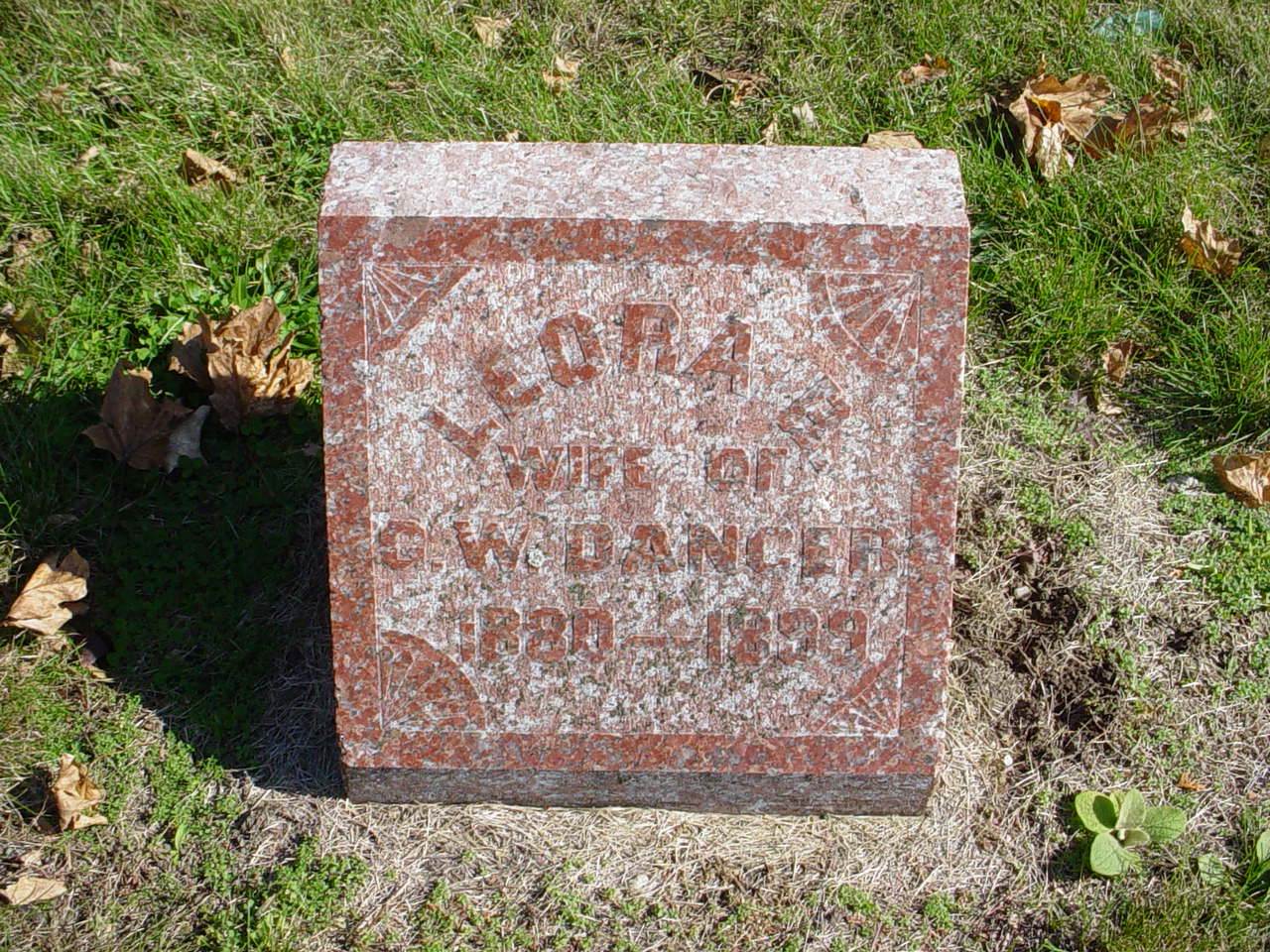
 Leora married George Dancer (b. 1877) in January 1899, but she died by the end of the same year. He remarried in 1902 to Carrie Belle Reed (1879-1924), and they had one son - but it is not clear whether Carrie might have been otherwise related to Leora's mother.
Kate, the last surviving daughter of John and Lovina Ferguson, stayed at home and single until she was 35. She worked as a photographer in a studio in Auburn, and married Ora E. Martz (1881–1944) on Boxing Day, 26 December 1917. In 1920, the couple was living with John and Lovina, and may have stayed with them until John died (in 1922) and Lovina died (in 1925). They had no children of their own.
And with that, we begin the saga of the Ferguson descendants of James Callin. It may take us a couple of months to go through and tell the stories of James and Eliza's other nine children and the dizzying array of surnames we'll be looking at may seem overwhelming.
As always, please let me know if you're related to any of these folks, and especially let me know if I missed anyone or got anything wrong.
* IOOF = Independent Order of Odd Fellows
Dora had married Charles Frederick Kinsey (1870–1949) on 13 December 1890, and they lived in Union township in De Kalb county, where Charles was the proprietor of his own shop. They had two children before Dora's untimely death in 1908; Charles then remarried Sophia M Kiner in 1910, and she helped him raise the children.
1. Gladys F Kinsey (b. 1893) attended Auburn High School, Class of 1913, and from there I have not been able to determine where she went.
2. Keith Harlan Kinsey (1905–1958) married Thelma M Schlegel (1906–2001) in 1924, and they had a son; but for whatever reason, they did not stay together for long. In 1930, Thelma and her 4-year-old son were living with her parents. She remarried, and presumably raised the boy. Keith married Garnet Geneva (Lewis) Sprowl (1905-1995) about 1939, and while there are places where the records could indicate that they may have separated at times in the next twenty years, they are buried together in the La Fontaine IOOF* Cemetery in Wabash county.
Keith served as a corporal in an Indiana field artillery unit during World War II.
a. Keith Charles Kinsey (1925–2003) grew up in Indiana and attended Purdue University where he was the President of the Purdue Aero Club in 1948. He accepted a commission in the U.S. Air Force in September 1949, and served in Korea and Vietnam, rising to the rank of Lieutenant Colonel. He lived in San Diego in the 1990s, died in Kirkland, Washington, in 2003, and he is buried in the Fort Rosecrans National Cemetery in San Diego, California.
I have not found any information indicating that he married or had any children.
 Leora married George Dancer (b. 1877) in January 1899, but she died by the end of the same year. He remarried in 1902 to Carrie Belle Reed (1879-1924), and they had one son - but it is not clear whether Carrie might have been otherwise related to Leora's mother.
Kate, the last surviving daughter of John and Lovina Ferguson, stayed at home and single until she was 35. She worked as a photographer in a studio in Auburn, and married Ora E. Martz (1881–1944) on Boxing Day, 26 December 1917. In 1920, the couple was living with John and Lovina, and may have stayed with them until John died (in 1922) and Lovina died (in 1925). They had no children of their own.
And with that, we begin the saga of the Ferguson descendants of James Callin. It may take us a couple of months to go through and tell the stories of James and Eliza's other nine children and the dizzying array of surnames we'll be looking at may seem overwhelming.
As always, please let me know if you're related to any of these folks, and especially let me know if I missed anyone or got anything wrong.
Friday, January 29, 2016
Update: Hattie Hess
Along with the Photo Feature from this morning, I have a special treat this week:
If you recall what I said back in August about the eldest daughter of Jessie Alverda Mohn Hess, you can skip down past this quote; otherwise, just to refresh your memory:
Well, there is more information, now - thanks in part to the recent availability of the U.S. Social Security Applications database on Ancestry.com - so here is an update on her family:
Hattie Helen Hess (1898–1961) grew up in Jackson township, Richland county, Ohio, and married Wilbur Albert Kirkendall (1900–1963) on 23 March 1922.
Albert was born and raised in Plymouth, Richland county. His parents were William A Kirkendall (1854–1941), also a native of Plymouth and a farmer of that post-Civil War generation, and Jennie Amanda Adams Stine (1871–1948). Jennie was not related to Franklin Pierce Stine (from last week's post, A Real Hoot), as far as I can tell. His father's name was Leonard, and I could not find any record tying his father to her father, Henry D Stine.
Albert had four younger siblings, and two older half-siblings from Jennie's first marriage. Albert and Helen had two children, a daughter and a son about eleven years apart, in age. In the 1940 Census, Albert's occupation is listed as "ferryman." Their son is still living.
Their daughter was Kennagene Lucille Kirkendall (1924–2001), and she married Harold Raymond Day (1919–2010) on 10 August 1943 in Cumberland, North Carolina. Harold does not appear to be related to the Day family mentioned in two earlier posts (The Distance of Close Connections or It's a Glyde Day), but I know there is another link to that family still ahead of us, so I'm sure we'll come back and take another look.
The son of Gabriel Day (1881–1949) and Beatrice "Bessie" Holycross (1898–1978), Harold graduated from Shelby High School, class of 1940.
He served in the U.S. Army during World War II, fighting in both the Battle of the Bulge and the Invasion of Normandy. He received the Purple Heart and the Bronze Star medal, along with the Normandy Invasion and Service Medals with four Bronze Stars and one Bronze Arrowhead.
After his military service, he worked at the Wilkins Air Force Depot and Shelby Cycle. He and Kennagene raised one son together, and they left behind a large number of great- and great-great grandchildren.
If you recall what I said back in August about the eldest daughter of Jessie Alverda Mohn Hess, you can skip down past this quote; otherwise, just to refresh your memory:
Hattie Helen Hess is a mystery to me. Though she appears in the 1900, 1910, and 1920 Census records in her parents' home in Jackson township, Richland county, I have not been able to scratch out any other records that match her. There is another Helen Hess of precisely the same age living in Richland county at the same time....
(Any further information about Hattie Helen's fate would be greatly appreciated.)
Well, there is more information, now - thanks in part to the recent availability of the U.S. Social Security Applications database on Ancestry.com - so here is an update on her family:
Hattie Helen Hess (1898–1961) grew up in Jackson township, Richland county, Ohio, and married Wilbur Albert Kirkendall (1900–1963) on 23 March 1922.
Albert was born and raised in Plymouth, Richland county. His parents were William A Kirkendall (1854–1941), also a native of Plymouth and a farmer of that post-Civil War generation, and Jennie Amanda Adams Stine (1871–1948). Jennie was not related to Franklin Pierce Stine (from last week's post, A Real Hoot), as far as I can tell. His father's name was Leonard, and I could not find any record tying his father to her father, Henry D Stine.
Albert had four younger siblings, and two older half-siblings from Jennie's first marriage. Albert and Helen had two children, a daughter and a son about eleven years apart, in age. In the 1940 Census, Albert's occupation is listed as "ferryman." Their son is still living.
Their daughter was Kennagene Lucille Kirkendall (1924–2001), and she married Harold Raymond Day (1919–2010) on 10 August 1943 in Cumberland, North Carolina. Harold does not appear to be related to the Day family mentioned in two earlier posts (The Distance of Close Connections or It's a Glyde Day), but I know there is another link to that family still ahead of us, so I'm sure we'll come back and take another look.
The son of Gabriel Day (1881–1949) and Beatrice "Bessie" Holycross (1898–1978), Harold graduated from Shelby High School, class of 1940.
He served in the U.S. Army during World War II, fighting in both the Battle of the Bulge and the Invasion of Normandy. He received the Purple Heart and the Bronze Star medal, along with the Normandy Invasion and Service Medals with four Bronze Stars and one Bronze Arrowhead.
After his military service, he worked at the Wilkins Air Force Depot and Shelby Cycle. He and Kennagene raised one son together, and they left behind a large number of great- and great-great grandchildren.
Subscribe to:
Posts (Atom)